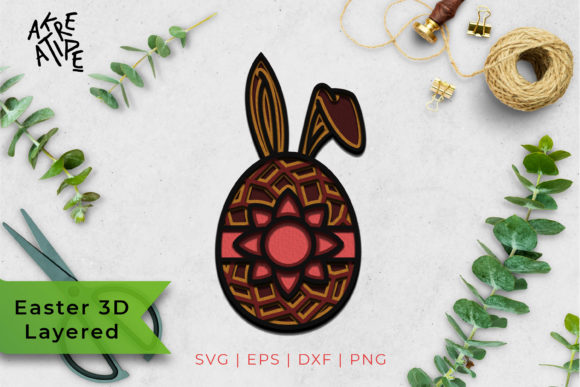
What Is a 3D Layered Easter Egg — And Why It’s More Than Just a Holiday Craft
When you hear “Easter egg,” your mind might jump to chocolate treats hidden in the garden or playful surprises tucked into movies and video games. But what about a 3D layered Easter egg? This isn’t just another seasonal decoration—it’s a captivating fusion of art, engineering, and digital creativity that’s gaining momentum across classrooms, maker spaces, and even marketing campaigns. In this article, we’ll unpack what a 3D layered Easter egg truly is, why it matters beyond springtime, and how it reflects broader trends in design, education, and technology.
Breaking Down the Basics: What Makes an Easter Egg “3D” and “Layered”?
A 3D layered Easter egg refers to a physical or digital object composed of multiple concentric, interlocking shells—each representing a distinct layer—that together form a complete, dimensional egg shape. Unlike a flat printed image or a solid plastic ornament, these eggs are built with depth, texture, and often intentional visual or functional separation between layers.
Think of it like peeling an onion—or better yet, unfolding a Russian nesting doll—but in spherical form. Each layer can feature unique patterns, colors, textures, or even embedded elements (like tiny LED lights, QR codes, or miniature illustrations). When assembled, the layers align precisely to create a cohesive whole; when disassembled, they reveal hidden details, storytelling sequences, or tactile experiences.
How It Differs From Traditional Easter Eggs
- Traditional eggs are typically solid, painted, or hollowed-out chicken eggs—decorated by hand using dyes, wax-resist (batik), or stickers.
- Plastic or wooden eggs may open but usually only have two halves—a simple hinge mechanism with no internal stratification.
- 3D layered eggs, by contrast, contain three or more independent, precision-aligned components—often designed using CAD software and fabricated via 3D printing, laser cutting, or CNC milling.
This structural complexity isn’t just for show. It opens doors to interactivity, education, and personalization in ways older formats simply can’t match.
Why Does This Matter? Real-World Applications Beyond the Basket
At first glance, a multi-layered egg might seem like a charming novelty. But its underlying principles resonate across fields where spatial reasoning, iterative design, and layered communication are essential.
In Education: Teaching Geometry, Sequencing, and Systems Thinking
Teachers use 3D layered Easter eggs as hands-on tools to teach core STEM concepts. For example:
- Students in middle school geometry measure curvature, calculate volume per layer, and explore symmetry and rotational axes.
- In early coding classes, educators embed simple narratives across layers—“Layer 1 shows spring, Layer 2 shows chicks hatching, Layer 3 reveals the nest”—to reinforce sequencing and cause-and-effect logic.
- Special education therapists incorporate textured layers to support sensory integration and fine motor development.
Unlike abstract diagrams or static worksheets, these eggs make abstract ideas tangible—literally something learners can hold, rotate, and explore from every angle.
In Creative Industries: A Canvas for Storytelling and Brand Engagement
Designers and marketers are embracing 3D layered eggs as experiential storytelling devices. Consider these examples:
- A boutique chocolatier releases a limited-edition collectible egg where each layer reveals a different origin story—from cocoa bean harvest (outer shell) to roasting notes (middle layer) to flavor pairing suggestions (innermost core).
- An indie game studio hides unlockable concept art inside a 3D-printed egg given to Kickstarter backers—each layer accessed only after solving a puzzle tied to their game’s lore.
- A museum creates an interactive exhibit on biodiversity: outer layer = habitat, middle = species, inner = genetic traits—inviting visitors to consider ecological interconnectedness.
These aren’t gimmicks—they’re deliberate applications of layered information architecture, a principle increasingly vital in our content-saturated world.
How It’s Made: From Concept to Creation
Creating a 3D layered Easter egg involves both creative vision and technical fluency. Here’s a simplified overview of the process:
- Ideation & Sketching: Artists define the narrative or function of each layer—e.g., “Layer 1 = seasonal motifs, Layer 2 = cultural symbols, Layer 3 = personal message.”
- Digital Modeling: Using tools like Tinkercad (beginner-friendly) or Fusion 360 (professional-grade), designers build concentric hemispheres with precise tolerances—ensuring smooth nesting and alignment.
- Material Selection: PLA plastic is common for 3D-printed versions due to its ease of use and vibrant color options; wood or acrylic work well for laser-cut editions.
- Assembly & Finishing: Layers are sanded, painted, or engraved—sometimes with UV-reactive inks or conductive traces for tech-enhanced variants.
Importantly, many free, open-source 3D models are available online—making it accessible for hobbyists, teachers, and students alike. Platforms like Thingiverse host dozens of customizable templates, often with step-by-step assembly guides.
Debunking Common Misconceptions
Because the term sounds technical, people sometimes assume 3D layered Easter eggs require expensive gear or advanced expertise. That’s not true—and here’s why:
- Misconception: “You need a 3D printer to make one.”
Reality: Laser-cut versions are widely used in schools with makerspaces, and paper-based pop-up versions (using layered cardstock) offer similar spatial learning benefits at zero equipment cost. - Misconception: “It’s only for Easter or religious contexts.”
Reality: The layered egg format is adaptable—used for Earth Day (layers showing ecosystems), graduation (milestones over time), or even corporate onboarding (onboarding stages as progressive layers). - Misconception: “It’s purely decorative.”
Reality: Many designs integrate functional elements—like compartments for small items, modular connectors for building larger sculptures, or NFC chips triggering audio stories when tapped.
Looking Ahead: Where Layered Design Is Taking Us
The rise of the 3D layered Easter egg mirrors a larger cultural shift toward intentional layering—in how we learn, communicate, and experience objects. We see this in:
- Augmented reality (AR) experiences that overlay digital layers onto physical eggs viewed through smartphones.
- Sustainable packaging where each recyclable layer serves a purpose—protection, branding, instruction, and reuse potential.
- Inclusive design practices that build accessibility into each stratum—e.g., braille on outer shells, high-contrast patterns on middle layers, and tactile icons on interiors.
As AI-assisted design tools grow more intuitive, generating custom layered eggs for personalized gifting, classroom differentiation, or therapeutic goals will become faster and more widespread.
Getting Started With Your Own 3D Layered Easter Egg
Whether you're a curious parent, a teacher planning a spring unit, or a designer exploring new formats, here’s how to begin:
- Start simple: Download a free SVG file for laser cutting or a basic STL for 3D printing—many include assembly tips.
- Invite collaboration: Assign each layer to a different student or team member, encouraging them to research and represent a theme (e.g., pollinators, local history, family heritage).
- Document the process: Photograph or film each stage—from raw material to final assembly—to reinforce metacognitive learning and celebrate effort.
- Think beyond Easter: Adapt the structure for any topic: solar system models, historical timelines, or even emotional regulation tools (“calm layer,” “focus layer,” “reflect layer”).
Remember: the power of the 3D layered Easter egg lies not in perfection—but in the thoughtful, layered way it invites us to see, understand, and connect with the world around us.