3D Rendering of Number: Turning Abstract Digits into Visual Impact
At first glance, “3D rendering of number” might sound like a niche technical exercise—something reserved for graphic designers or CGI specialists. But in reality, it’s a powerful communication tool with wide-ranging practical value. Whether you’re designing a product launch campaign, developing an educational app, creating data-driven presentations, or building immersive brand experiences, transforming numbers into three-dimensional visual forms adds clarity, memorability, and emotional resonance. Unlike flat typography or static charts, 3D-rendered numbers occupy space, cast shadows, reflect light, and invite interaction—making them uniquely effective for conveying scale, importance, and context.
What Exactly Is 3D Rendering of Number?
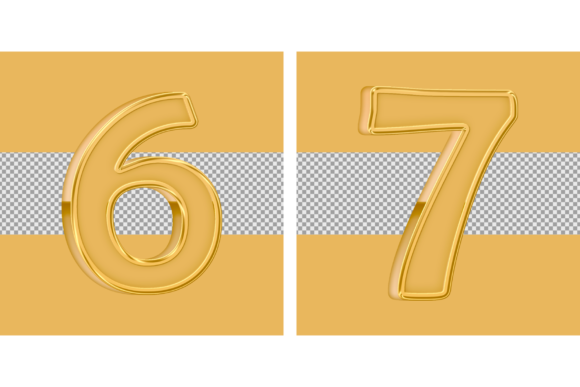
3D rendering of number refers to the digital process of modeling, texturing, lighting, and rendering numeric characters (0–9, decimals, or even mathematical symbols) as fully realized three-dimensional objects. This isn’t just adding a drop shadow or bevel effect—it involves constructing geometry that behaves realistically under simulated lighting conditions, complete with depth, perspective, material properties (e.g., brushed metal, frosted glass, glowing neon), and environmental interactions like reflections or ambient occlusion.
It’s distinct from basic vector effects or CSS 3D transforms because it leverages professional 3D software (such as Blender, Cinema 4D, or Maya) or real-time engines (like Unity or Unreal Engine) to generate photorealistic or stylized outputs—still images, animated sequences, or interactive web-based visuals. The result is a number that feels tangible, intentional, and context-aware—not just seen, but experienced.
Why People Turn to 3D Rendering of Number
Adult professionals often seek out 3D rendering of number when traditional representations fall short. Consider these common situations:
- Data storytelling needs emphasis: A key metric—like “$2.4M in annual savings” or “97% user satisfaction”—gets lost in dense reports. A bold, metallic “97%” rendered in 3D stands out instantly in a pitch deck or dashboard.
- Branding demands differentiation: In crowded markets—especially fintech, health tech, or edtech—custom-number visuals reinforce identity. Think of a financial app using sleek, liquid-metal numerals that match its UI language.
- Educational content requires clarity: For learners grappling with abstract concepts (e.g., exponential growth or geometric sequences), seeing “106” emerge as a towering, layered structure makes magnitude intuitive.
- Physical product integration is needed: Architects, industrial designers, or packaging teams use 3D-rendered numbers to preview how serial codes, dimensions, or model numbers will appear on curved surfaces, textured materials, or under specific lighting.
How It Solves Real-World Challenges
The power of 3D rendering of number lies in its ability to bridge perception gaps. Numbers alone are cognitive abstractions; they require mental translation. A 3D version reduces that cognitive load by encoding meaning visually:
- Scale becomes visceral: Rendering “1,000,000” as a spiraling tower of stacked coins—or “0.001” as a tiny, delicate crystal—communicates proportion without needing comparative benchmarks.
- Trust is reinforced through realism: Photorealistic renders signal precision and professionalism—valuable in investor decks, regulatory submissions, or client proposals where credibility matters.
- Engagement increases through motion: Animated transitions—such as a number assembling from particles or rotating to reveal embedded data layers—hold attention longer than static slides, especially in digital signage or social media ads.
Practical Applications You Can Implement Today
You don’t need a full VFX studio to benefit from 3D rendering of number. Here’s how different users can apply it effectively:
Marketers & Content Creators
Use lightweight 3D number renders in hero banners, email headers, or LinkedIn carousels. Tools like Blender (free and open-source) let you generate high-quality stills in under an hour—even with beginner-level skills. Focus on consistency: choose one material (e.g., matte ceramic) and lighting setup across all campaign numbers to build visual cohesion.
Educators & Instructional Designers
Embed simple 3D-number animations in LMS modules or explainer videos. For example, render “½” as two interlocking puzzle pieces that snap together—reinforcing the concept of equivalence. Prioritize clarity over complexity: subtle rotation and soft shadows often communicate more than glossy reflections.
Product & UX Designers
Integrate 3D-rendered numbers into design system documentation—not as decoration, but as functional examples. Show how “7” appears on a dark OLED screen versus matte-finish packaging. This supports cross-functional alignment between designers, engineers, and manufacturers.
Key Considerations Before You Begin
While accessible, successful 3D rendering of number depends on thoughtful planning:
- Purpose first, polish second: Ask: “What action should this number prompt?” If the goal is quick comprehension, avoid excessive detail. A clean, well-lit “5” in satin aluminum reads faster than a hyper-detailed “5” draped in velvet.
- Context dictates style: A healthcare dashboard benefits from calm, neutral tones and soft edges; a gaming app might use dynamic angles and emissive glows. Match your number’s aesthetic to audience expectations and platform constraints (e.g., file size for web use).
- Accessibility remains essential: Always pair 3D renders with semantic HTML or alt text describing the number and its significance. Never rely solely on visual form to convey meaning—especially for screen readers or low-bandwidth users.
- Rendering time vs. ROI: High-fidelity renders take longer—but for recurring assets (e.g., quarterly KPIs), build reusable templates. Save camera angles, lighting rigs, and material presets to cut future production time by 60% or more.
Getting Started Without Overwhelm
If you’re new to 3D rendering of number, start small:
- Identify one high-impact number you use repeatedly (e.g., your core conversion rate or mission statement year).
- Sketch how you’d like it to feel—weighty? luminous? grounded?—then search for free Blender tutorials on “text extrusion” and “basic lighting.”
- Export as PNG with transparent background and test it alongside your existing visuals. Does it improve focus? Does it align with your tone?
- Iterate: Adjust material roughness, light direction, or camera distance—not every change needs to be dramatic to lift perceived quality.
Remember: the goal isn’t photorealism for its own sake. It’s about making numbers work harder—for your message, your audience, and your outcomes. When done intentionally, 3D rendering of number transforms passive information into active insight. It turns statistics into statements, metrics into milestones, and digits into distinction.
Whether you're refining a sales presentation, launching a data product, or simply aiming to make complex information feel human again, investing time in 3D rendering of number pays off—not in rendering hours, but in understanding gained, trust built, and decisions accelerated.